
Consortium Event
Wetlands Workshop for Landowners
March 21, 2026 in Cumberland, Va
A group of landowners from across the James River watershed came together in Cumberland State Forest to learn more about one of our most diverse and dynamic ecosystems: wetlands! Led by Mike Hayslett from Virginia Vernal Pools, LLC, the fifteen attendees spent the day on a tour of four different sites across the state forest. Mike taught the group about the difference between riverine, lacustrine, and palustrine wetland systems and their unique ecological values.
Understanding the Three Wetland Types
-
- Riverine wetland: wet areas that are located within floodplains and riparian corridors along flowing bodies of water such as rivers, streams, and creeks.
- Lacustrine wetland: wet areas found along the shorelines of large bodies of water, such as lakes.
- Palustrine wetland: wet areas that are inland and dominated by trees and shrubs. They differ from the other two wetlands because they lack moving water and are not associated with a large body of water, such as a lake.
In addition to learning about the different types of wetland ecosystems, participants were able to experience them in person. Mike showed the group examples of native wetland species and how they’re adapted to those environments, as well as non-native invasive species and how to identify them. These lessons were accompanied by the singing of spring peepers and chorus frogs throughout the day, showing the life that fills these unique ecosystems. Spotted salamander larvae swam in the water, and participants had the opportunity to safely hold a salamander egg mass.
The workshop transitioned from experiencing different types of wetland sites in the morning, to taking a short hike in the afternoon and viewing a wetland slated for a restoration project in 2026. Mike explained how historical farming activities often included digging surface ditches to redirect water and drain wetlands for agricultural conversion. Workshop participants were able to see in person the abandoned ditches that were negatively impacting the remnant wetland area and the extensive reach of the historical ditching network through aerial imagery. Mike went on to explain the methods that were going to be used to restore the site, including ‘plug and fill’ to block the ditches and allow water to spread outwards across the wetlands. As the day concluded, participants walked away from the experience knowing more about wetlands and the different resources available to those interested in wetlands restoration.
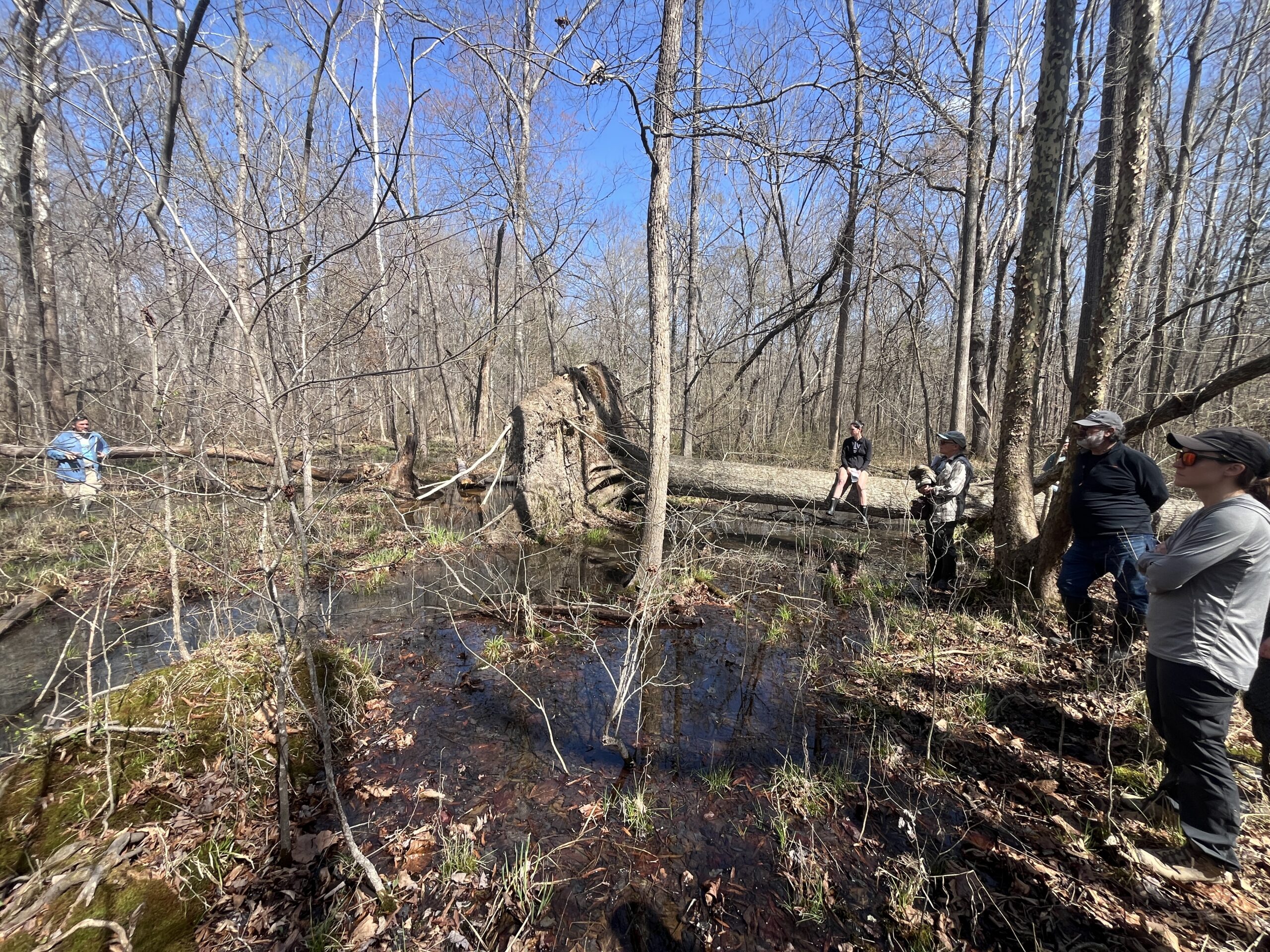
Above: Workshop attendees around a wetland area in Cumberland State Forest.
Below: Salamander egg mass!

Resources Available to Cumberland Landowners
https://jamesriverconsortium.org/landowner-resources/cumberland-co-wetlands-improvements/