About the Consortium
About Us
The Upper & Middle James Riparian Consortium (Consortium) is a group of partners with the shared vision of “Growing partnerships to create healthy streamside ecosystems for clean water in the James River today and tomorrow.”
Consortium partners work together in this collaborative effort with a Steering Committee guiding decision making, dedicated Action Teams working on priority strategies, and an open door to new members and ideas.
Our Mission: To support a network of partners to raise awareness, build workforce capacity, and increase implementation of riparian forested buffers across the Upper and Middle James watersheds through collaboration.
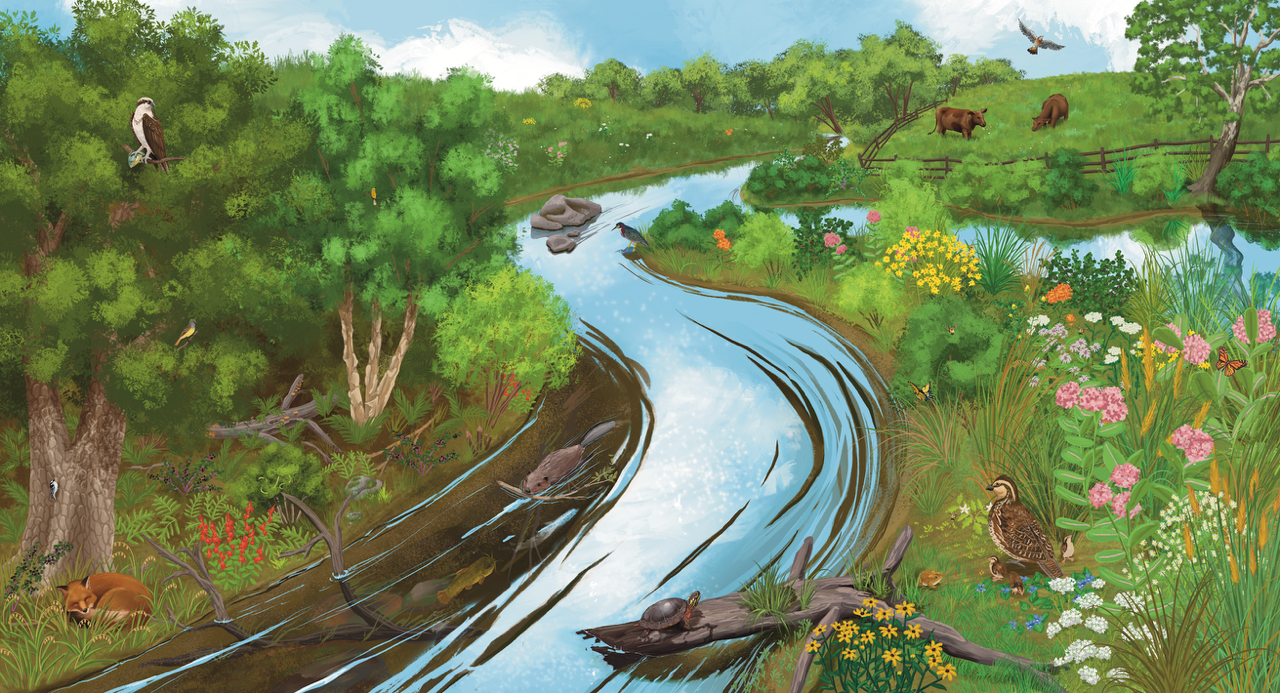
Nick Garnhart, the Smithsonian’s Virginia Working Landscapes
What is a riparian buffer?
Forest buffers are the trees, shrubs and other plants that grow next to streams and rivers. Forest buffers are also called riparian or streamside buffers. Learn more »
Our Values

Collaboration
We can go further together and seek opportunities to support, collaborate with, and learn from diverse partners both within and outside the James River watershed.

Initiative
Stewardship
Holistic
Our Process
Text here.
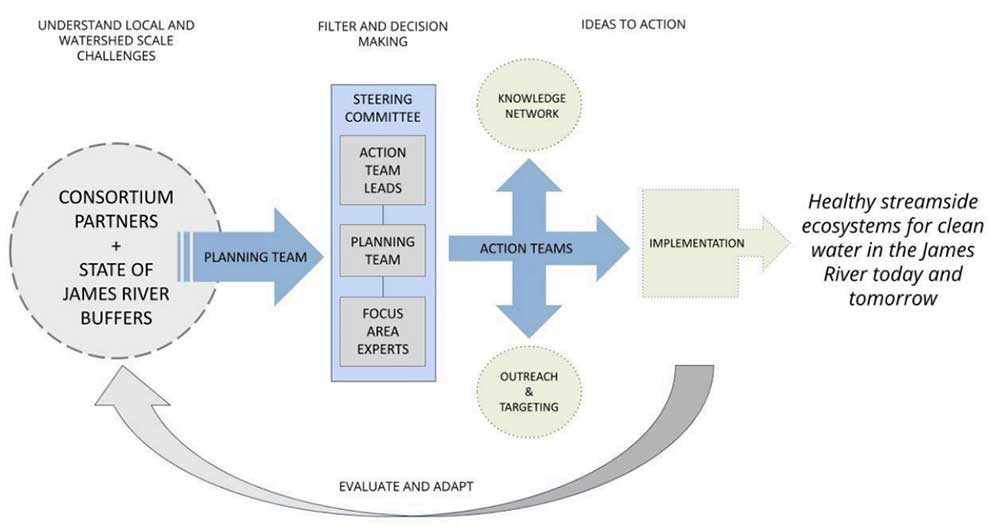
click to enlarge
Resilient Collaborative Model
For the Consortium to be resilient over time, it needs to build on our foundation and stabilize core functions, remain open to innovation through testing out strategies through new partnerships, and to let go of limited strategies and focus on sustaining successful ones. These all depend on a clear evaluation process and a supportive funding model.
In 2023, the Consortium SC developed a Resilient Collaborative Model including three elements: 1) Collaboration, 2) Action, and 3) Funding, to enable the Consortium to work towards its mission and vision in a self-sustaining partnership model.
Brief History
JRA received funding from the National Fish and Wildlife Foundation (NFWF) to support the development of the Consortium between January 2019-December 2021. The Consortium went through a three year process of formalizing a structure, testing out strategies, and refining approach as the partnership moves forward.
View the Consortium Annual Reports for success highlights and previous meeting summaries. JRA received additional funding from NFWF (2022-2024 and 2025-2027) to build on the successes of the Consortium thus far and build a resilient collaborative model to sustain the Consortium.
Equitable Collaboration Resources
A bit of text here?
Where We Work
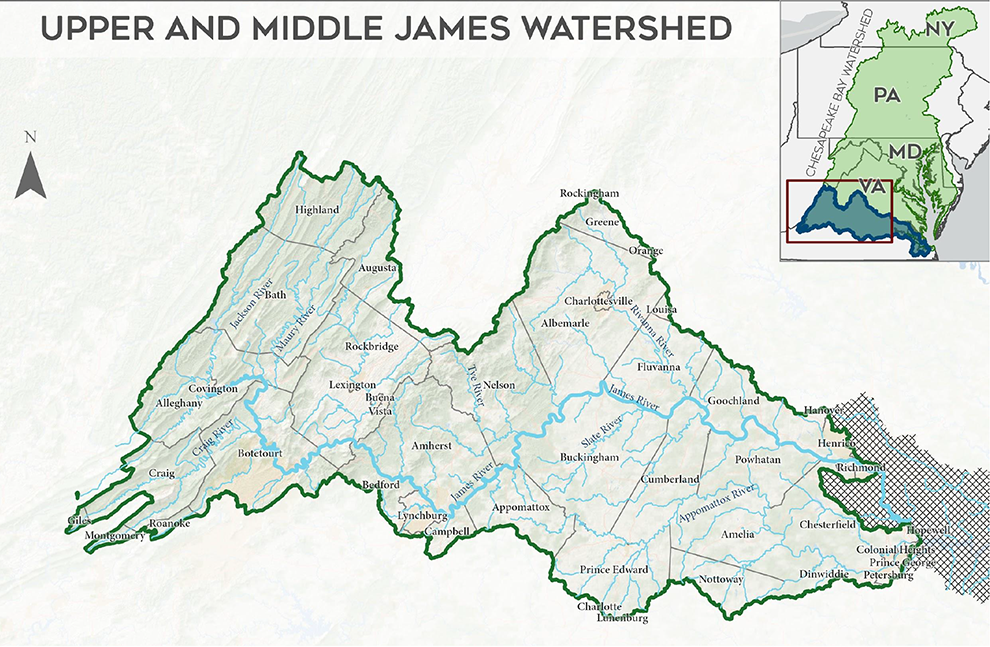
Our area of focus is the freshwater region of the James River watershed from the Blue Ridge and the Valley and Ridge regions of Virginia to the Piedmont region of Virginia. Click on map at right for more detail.